Perhaps an addendum to this case — and to making sense of the outcomes — is that Blackberry/RIM is not actually dead. It is nowadays a profitable but smaller business. Their core product categories was obliterated (phones) but two of the core strengths they had — network and security — seem to continue to live on in their QNX division for internet of things (IOT) services, which has a near monopoly for automotive computing, and cybersecurity division (which apparently services gov/defense sectors?).
The QNX automotive computing is apparently upwards of 90% of automobile makers in the US/EU. (This is for the parts and critical infrastructure and instruments that run the actual vehicles, not for the Carplay/Android Auto touchscreens). I found out about this when trying to figure out why it was so hard for ICE car manufacturers to transition to EV manufacturing and fell down a bit of a rabbit hole.
This feels like a noteworthy addendum because if the time frame is extended, RIM’s initial foundational partner was GM:
Budgie ended up becoming a commercial failure. But it attracted the attention of General Motors, who signed the young duo to manufacture LED notification systems for their assembly lines. They secured many other engineering contracts along the way, such as designing circuit boards for factory equipment and barcode readers for film-editing machines.
[…]
Over the next few years, it became increasingly clear that supplying technology to larger companies just left them dependent on them, who would delay payments or cancel contracts. The co-CEOs concluded that they had to build and sell their own device.
Building on its experience developing portable radio modems, RIM began exploring a wireless device that could be used to send and receive emails while professionals were away from their desks.
Because the wireless networks were so narrow, an email needed to be broken down into small packets, sent separately and assembled at their destination. RIM designed their entire delivery chain around this constraint.
[…]
Another differentiator was BlackBerry’s “push” email. On other devices, users had to log in and request new messages. RIM instead routed work email automatically from the desktop through its network to the handheld, which buzzed once the message was processed and ready to read.
This was an incredible technical achievement — albeit one that required considerable technical investment in addition to usage of relatively new mobile data networks. In effect, BlackBerry had to run a large network of relay servers, routing notifications and emails through its own infrastructure. This adaptation to the technological limitations of its day had its benefits — but also drawbacks, as we shall soon see.
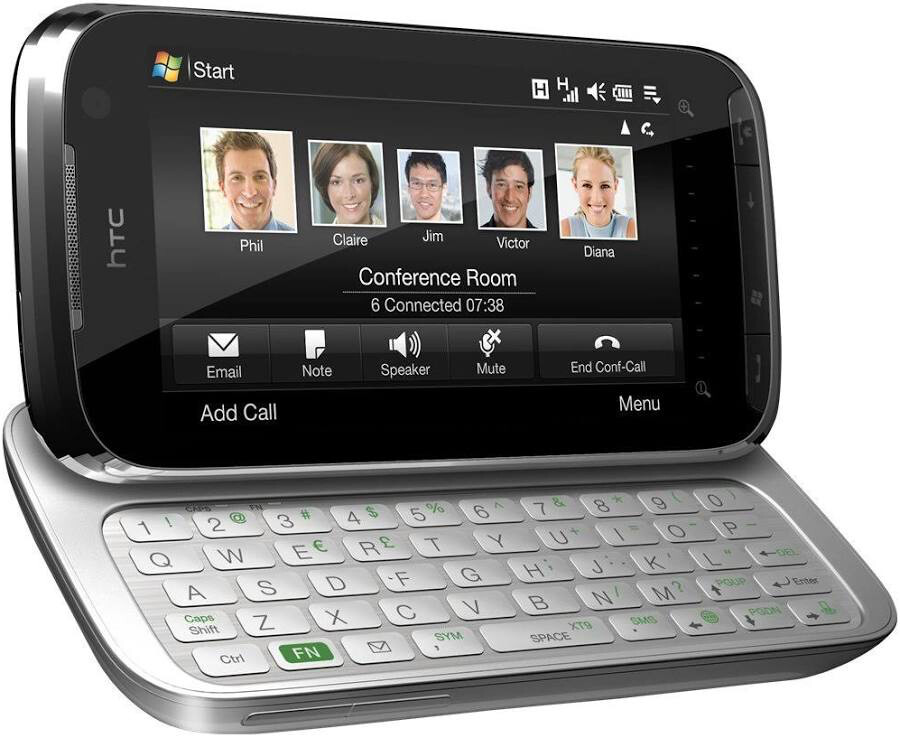
RIM designed the device around battery and bandwidth efficiency. The Inter@ctive 950 could run for nearly a month on a single AA battery. Its compact QWERTY keyboard was shaped specifically for two-thumb typing, making email much faster to compose on the move.
The early pagers also established RIM’s proprietary security architecture. Since messages were passed through RIM’s servers, RIM designed its pagers so that they compressed and encrypted the messages as it travelled through RIM’s relay system. The same relay and encryption model was then carried into BlackBerry mobile phones.
Things like innovation in bandwidth and battery efficiency, encryption, and communication encryption and protocols continue to live on today but in different products.
That said, QNX was an acquisition so this is more of a “it rhymes” rather than direct of causality, but it is interesting to me that their initial core competencies outlived the product category that was initially best suited for the deployment of those competencies. The product category (arguably “enterprise communications hardware”, not “commercial phones” albeit they looked very similar) died for them (as all product categories do, eventually), but after two rounds of leadership left they were able to salvage their business.
(As an additional aside, their competency certainly wasn’t touchscreen technology, as evidences by their approach to treating glass interfaces as giant tactile buttons compares to the software-first design Apple implemented, as notes in Ken Kocienda’s “Creative Selection”).
This makes it more interesting for me as an extended case study of if a company’s core product category is obliterated by competition, do they have strengths to leverage to pivot to something else or is that product itself the strength? If the product is the strength, and there is little left after the category goes away, can the company survive?
—
As a personal example, one of my first serious jobs was as a publisher/editor of hyperlocal magazines for a company called “hibu”. That’s not a name I think anyone would recognize but folks might remember who they were before the rebranding to hibu: they were the Yellow Pages phone book directory. That product had very little competition but the category was killed with the internet. The product of “yellow pages, but online” wasn’t anywhere near as profitable, so they went back and said “what capabilities do we actually have that can be redeployed for a different business model?”
What they had was a hyper local sales team that reached small businesses that wanted to target their communities and a massive printing operations. They took a page from Patch.com and started printing and distributing local news “magazines” once a month with local ads and stories. (I was brought on to do this — spin up local magazines, each of which targeted a set of ad-sensitive zip codes, and to write, edit and publish those magazines each month.)
I don’t think that product was successful in the long term, but it was a bridge for hibu to eventually transition to small/local businesses professional services for web presence management (kinda like a Yext competitor?).
My next serious role was in a company going through something similar, but handling it the opposite way. When I joined MediScripts, they sold prescription pads to doctors with advertisements in them. It was a wildly profitable business with maybe one or two competitors, but the whole category of product was going away as EHRs were mandated and came with e-prescribing tools. The company also had a strong sales team with relationships across all of pharma, and a strong printing operation that invested in tamper-proof technology. One might think they could leverage that to sell tamper-proof printing of other kinds for the pharma industry as a smaller but still profitable operation, but they chose to ignore both strengths and leaned into all sorts of wacky ideas based around whatever was hot at the time (social media! Digital tech!) or whatever billing codes could be arbitraged for little effort and high volume (annual exams! Behavioral health surveys!). The sales team left for greener pastures and suddenly there was no defensible strength or competency left within the company. Unsurprisingly, the company made zero progress on any of those projects and eventually they disappeared so far as I can tell.
So all in all, IMO Blackberry’s death (as a company, not as a product) has been overstated and while it is not a great outcome in the sense that it is a much diminished company compared to their peak, this is perhaps a generally positive story in a long enough time frame of what reversion to the mean after a strong product run looks like.